The Indoor Ecosystem: A Theoretical Guide to Botanical Success
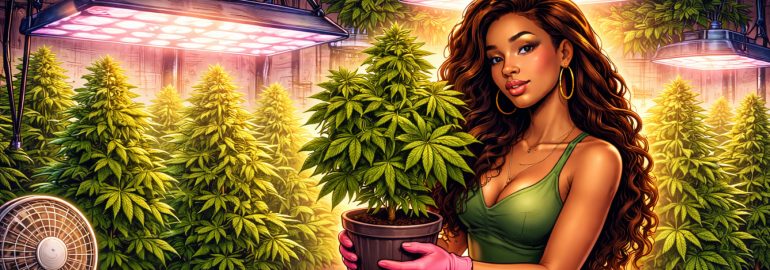
Cultivating indoors will have developed beyond the casual hobbyist to a complex study of managed biological systems. Growing high-quality cannabis indoors is now less an art of trial and error than it is managing a closed-loop ecosystem of technology and biology to create professional-level results.
How to Grow Cannabis at Home: The Five Pillars
Success in growing quality cannabis indoors requires a full understanding of the “Law of the Minimum” and if any of these five pillars are ignored, they impact the overall performance of the system:
| Factor | Biological Role | Theoretical Requirement |
| Photons (Light) | Primary Energy Source for Photosynthesis | Full Spectrum LED Arrays for Optimal Resin Production |
| Atmosphere (CO2) | Building Blocks of the Plant Structure | Constant Air Exchange to Prevent Stagnant Carbon Pockets |
| Hydration | Vehicle for Nutrient Transport | Precise pH Levels (6.0-6.5) to Ensure Nutrient Bioavailability |
| Nutrition (NPK) | Essential Minerals for Cellular Repair | Shifting Ratios from Nitrogen Heavy to Phosphorus Rich |
| Microclimate | Regulator of Metabolic Speed | Maintaining the “Vapor Pressure Deficit” (VPD) for Transpiration |
Understanding the Life Cycle
When growing cannabis at home, you must be able to differentiate between the two main stages of a plant’s life cycle:
- The Vegetative Stage: This is the structural foundation of the plant. Plants during this stage need 18+ hours of light to focus all their energy on developing leaves and stems. High nitrogen levels and moderate humidity are ideal for this stage.
- The Flowering Stage: By switching the light cycle to 12 hours of complete darkness, you signal the plant to enter into its reproductive cycle. This stage needs low humidity to protect the integrity of the botanical compounds produced by the plant and higher levels of potassium.
Substrate Theory: Soil vs. Hydroponics
Your substrate choice is another important decision when growing cannabis at home.
- Organic Soil: Organic soil acts as a biological buffer using beneficial microorganisms to break down nutrients. While organic soil is more forgiving and allows for slower growth, hydroponic/inert media provide the highest level of control over what nutrients are provided to the root zone and allow for faster growth rates, but also require stricter daily monitoring of the solution.
Expert Insight:
In 2026, top tier growers focus on VPD (Vapor Pressure Deficit). VPD measures a plant’s ability to breathe through its stomata. If either side of VPD is out of range, regardless of how many nutrients you give a plant, it will stop absorbing them.
FAQ: Theoretical Fundamentals
- Why is air filtration necessary? As plants enter into their flowering stage, they start producing volatile organic compounds (terpenes), which require a carbon filter system to maintain a discrete and clean indoor environment.
- Can plants grow with standard household bulbs? No. Standard household bulbs do not offer the specific PAR (Photosynthetically Active Radiation) needed for plants to thrive. Mastering how to grow quality cannabis indoors requires specialized lighting designed to mimic the sun’s intensity.
Skip the Learning Curve – Experience the Harvest
Learning how to grow cannabis indoors may be interesting from a scientific standpoint, however harvesting the perfect crop takes months of patience and precision. If you’re not prepared to transform your home into a laboratory, there is always a way to experience the best of 2026 botanical standards immediately.
Canna City has taken care of the science, light cycles and curing process for you. Our collection of the best cannabis products includes the world’s most sought after strains, cultivated in state-of-the-art facilities and shipped directly to your front door.
- All categories
- Bud grinders
- Bud in UK
- Bud pipes
- Cannabis and body
- Cannabis Communities
- Cannabis edible
- Cannabis for Creative
- Cannabis for Energetic
- Cannabis for Euphoric
- Cannabis for feeling Happy
- Cannabis for Focus
- Cannabis for Relax
- Cannabis for Sleep
- Cannabis Growth
- Cannabis high
- Cannabis Scams
- Cannabis test
- Cannabis traveling
- CBD
- Cooking with Cannabis
- Halloween weed
- Hash in UK
- High octane strain
- Hybrid in UK
- Indica in UK
- Moderate THC
- Sativa in UK
- THC Flower in UK
- THC Hybrid
- THC in UK
- THC Vape
- Weed accessories
- Weed and weight gain
- Weed for beginners
- Weed for holidays
- Weed hangover
- Weed joints
- Weed oil in UK
 Security Updates