How Weed Wax Is Made?
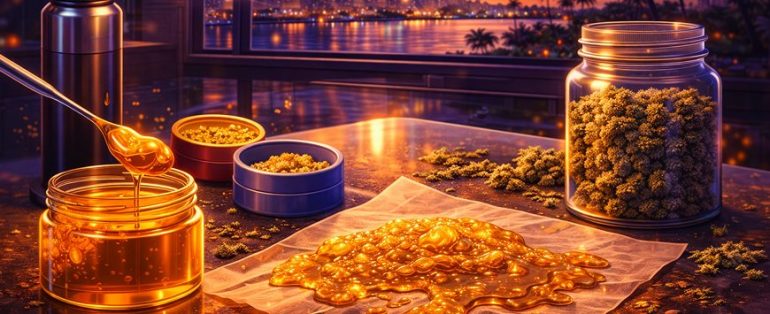
Weed Wax, often called cannabis wax or THC Wax, is an extremely potent and concentrated type of cannabis product with a very high concentration of terpenes and a distinctively dense, crumbly texture.
Weed Wax is created via a cannabis concentrate process that uses solvents to isolate the cannabinoids and terpenes within the cannabis plant.
Creating commercially available weed wax follows the same basic process as creating butane-based extracts; separating the active components of the cannabis while retaining flavor and potency.
The Main Methods for Making Commercial Weed Wax
The primary methods for creating commercial weed wax include:
- Selection of cannabis. High-quality flowers or trim is selected. Higher quality flower/trim typically provides a better wax.
- Solvent Extraction. Liquid butane is passed over the cannabis, whereupon the liquid dissolves the cannabinoids and terpenes.
- Evaporation/Purification Stage. The solution is then heated under vacuum to remove excess butane from the solution.
- “Whipping”. During the evaporation/purification phase, the solution is continuously mixed and/or “whipped”. The presence of butane bubbles within the solution causes the cannabinoids to be forced into a crystalline state as opposed to a transparent/clear state, and this disrupts the molecular structure of the cannabinoids.
- Formation of Wax. The continuous mixing and/or whipping of the solution prevents the cannabinoids from forming a clear, transparent, glass-like extract. This results in a relatively soft and opaque textured wax.
How Do Cannabinoids Create a Unique Texture in Weed Wax?
The reason behind weed wax’s texture is primarily due to the molecular arrangement of the cannabinoids in the solution.
If cannabinoids are allowed to crystallize naturally, they create a clear, glass-like extract. However, if the solution is whipped during processing, the natural crystallization is disrupted by the incorporation of solvent bubbles within the solution.
These disruptions cause:
- An opaque color as opposed to a transparent color
- A soft and crumbly texture
- Increased surface area (more terpenes released)
- A softer, crumblier texture than shatter
It is not arbitrary; the texture is controlled chemistry.
Depending on the processing techniques employed, different varieties of weed wax exist.
| Variety | Texture | Special Characteristics |
| Budder | Creamy, smooth | Butter-like consistency |
| Crumble | Dry, crumbly | Breaks apart easily |
| Honeycomb | Air-filled, porous | Has sponge-like structure |
| Badder | Thick and whipped | Preserves terpene |
Is Temperature Important for Weed Wax Production?
One single factor influences the final outcome of the creation of weed wax – the purging temperature of the solution during the purification stage.
If the purging temperature is increased, the solvent is quickly removed, however fewer terpenes remain.
If the purging temperature is reduced, more terpenes are retained and the flavor is preserved, however the length of time to complete the production process is extended.
Must Weed Wax Only Be Created Via Butane?
No. Although BHO has become the most common means of making wax, there are other alternatives:
- CO2 extraction — Cleaner method of extraction, less aggressive solvent
- Rosin pressing — Utilizes no solvents in the manufacturing process (heat and pressure)
- Ethanol extraction — Used for industrial production of wax.
Want to Try?
Check out the many different types of cannabis concentrates available at Canna City, which includes premium THC vape products and hand-picked strains. Compare your options and choose the best option for your needs. Explore our large collection of cannabis products today.
- All categories
- Bud grinders
- Bud in UK
- Bud pipes
- Cannabis and body
- Cannabis Communities
- Cannabis edible
- Cannabis for Creative
- Cannabis for Energetic
- Cannabis for Euphoric
- Cannabis for feeling Happy
- Cannabis for Focus
- Cannabis for Relax
- Cannabis for Sleep
- Cannabis Growth
- Cannabis high
- Cannabis Scams
- Cannabis test
- Cannabis traveling
- CBD
- Cooking with Cannabis
- Halloween weed
- Hash in UK
- High octane strain
- Hybrid in UK
- Indica in UK
- Moderate THC
- Sativa in UK
- THC Flower in UK
- THC Hybrid
- THC in UK
- THC Vape
- Weed accessories
- Weed and weight gain
- Weed for beginners
- Weed for holidays
- Weed hangover
- Weed joints
- Weed oil in UK
 Security Updates